Central San service area · Walnut Creek, CA
Sewer Line Replacement in Walnut Creek, CA
In Central San's service area you own the sewer lateral all the way to the main, including the part under the street. Replacing it takes a Central San permit, and most homes now need an overflow protection device.
Whether you're dealing with a backup today or holding a camera report that says “replace,” talk to a local contractor who does lateral work in Walnut Creek, Lafayette and Danville.
- You own
- House to main
- Permit
- Central San
- Typical cost
- $8,000–$18,000+
- Methods
- Trench · burst · line
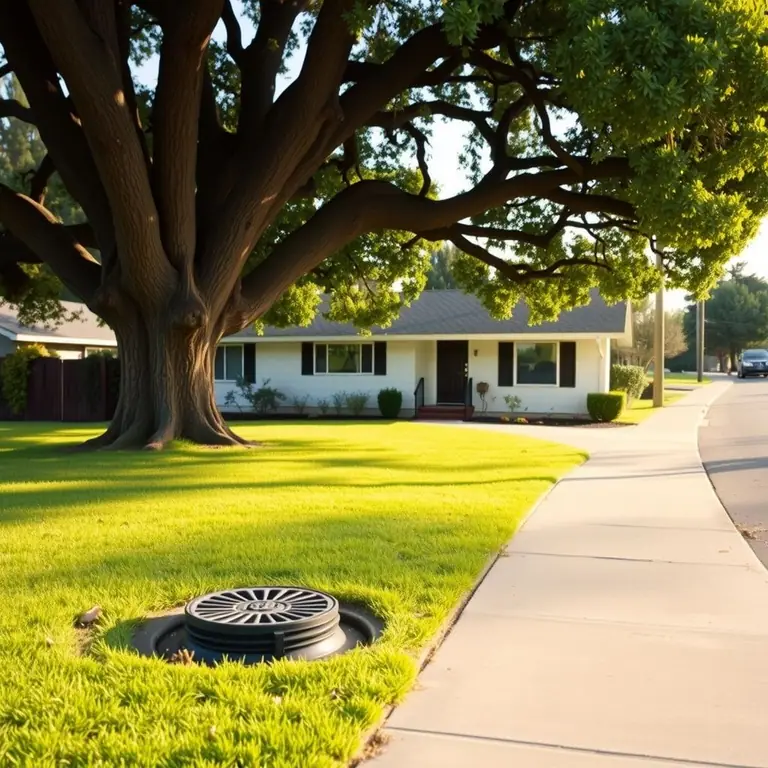
What's going on with your sewer line?
Pick the situation closest to yours. Each one leads to the page that answers it.
- Case ABackup or slow drains nowSeveral drains slow at once, gurgling toilets, water in the shower when you flush. What it usually means and what to do first.
- Case BAn inspection found damageRoots, cracks, an offset joint or a belly on the video. Repair or replace, by defect.
- Case CBuying or selling a homeNo point-of-sale rule in Central San territory, but buyers often order a scope. How to read it and negotiate.
- Case DPlanning a replacementCosts, methods, permits and financing, so you can compare quotes on equal terms.
Replace, repair or go trenchless?
The camera footage decides more than anything else. Here is how the main approaches compare on a typical Walnut Creek–area lateral.
| # | Method | Best when | Yard and driveway | Notes |
|---|---|---|---|---|
| M-01 | Open-trench replacement | Line is collapsed, badly bellied, or needs its slope corrected | Trench along the whole route | Simplest to inspect; restoration is the hidden cost |
| M-02 | Pipe bursting (trenchless) | Old pipe is broken but the route is still passable | Two or more access pits | Central San requires a pre-TV inspection before it issues a bursting permit (source) |
| M-03 | Pipe lining (CIPP) | Cracks and root entry in pipe that still holds its shape | Often through the cleanout | Not a fix for bellies or collapsed sections |
| M-04 | Spot repair | One bad section in otherwise sound pipe | One excavation | Ask what the rest of the line looks like on video |
Compare trenchless options · See repair vs. replace by defect
What the camera is looking at
Most homes here were built in the 1960s and 70s: Census data puts Lafayette's median home at 1960 and Walnut Creek's in the early 1970s (ACS). A lateral that old has had decades of tree roots and soil movement working on its joints.
- 1 · Root intrusion. Fine roots enter through a joint and grow into a mat that catches waste.
- 2 · Offset joint. One section has shifted, leaving a lip that snags paper and lets soil in.
- 3 · Belly. A low spot where the pipe has settled and holds standing water.
What a lateral replacement costs here
Most residential lateral replacements in the Bay Area land between $8,000–$18,000+, according to a 2026 guide from a Bay Area plumbing company (Next Level Plumbing). Long or deep laterals, hillside lots and work under the street push jobs into the $15,000–$30,000+ range. Real quotes can land below or above these numbers.
The biggest swings come from length, depth, access and street work. A short lateral under a flat lawn and a long one under a driveway and across the street are different projects.
Most-common range for a residential lateral replacement.
- Pipe bursting, per foot
- $60–$200+
- CIPP lining, per foot
- $80–$250+
- Camera inspection
- $250–$500+
- Encroachment permits
- $500–$2,500+
Central San in four facts
Central San (the Central Contra Costa Sanitary District) sets the rules for lateral work in Walnut Creek and most of the surrounding area. Its own pages say:
You own the whole lateral
Each owner is responsible for “the entire sewer from the house to where it connects to Central San's main sewer line” (Permit FAQs).
Outside work needs a permit
“When sewer work will occur outside the building, whether it is on property or off property, a Central San sewer permit is required” (Sewer Repairs).
An overflow device is required
Central San requires an overflow protection device on every home, and a cleanout within 2 feet of the foundation (Sewer Repairs).
Financing exists
Up to $12,500 for a single-family 4-inch lateral, repaid over 15 years on the property tax bill (Financing Program).
Read the full Central San lateral guide, including who may do street work and how inspections are scheduled.
How a request works
- Call or send the formTell us what is happening and where the property is. Thirty seconds on the phone is enough.
- A local sewer contractor follows upThey ask about symptoms, any camera footage you already have, and how the line runs.
- Inspection and a written quoteExpect a camera inspection if there isn't a recent one, then a quote that names the method, length, permit and restoration.
- You decideCompare it with other quotes using our contractor checklist. There is no obligation.
Walnut Creek and the 680 / 24 corridor
Requests come from Walnut Creek and nearby communities served by Central San, with dedicated pages for the places where lateral work looks different:
- Lafayette: older homes (1960 median), long and steep laterals on hillside lots.
- Danville, Alamo and Blackhawk: 1978–1988 subdivisions, mature landscaping and HOA approvals.
- Also Orinda, Moraga, Pleasant Hill and nearby communities: all areas.
Check any contractor in two minutes
- Look up the license on the CSLB website: active status, classification and workers' comp. Central San issues repair permits only to a plumber or a contractor with an “A” license (Central San).
- For work in the street or a Central San easement, the contractor must be registered with Central San. Ask whether they are on the current contractor list.
- Ask who pulls the Central San permit and books the inspections, and whether the quote includes the overflow protection device and cleanout.
- Get the camera footage, not just a summary, so you can get a second opinion.
The full contractor checklist covers quotes, red flags and warranties.
Questions homeowners ask
What is the average cost of replacing a sewer lateral in the Bay Area?
A Bay Area plumbing company's 2026 guide puts most residential lateral replacements at $8,000–$18,000+, with complex jobs (long runs, deep lines, street work) at $15,000–$30,000+ (Next Level Plumbing). Length, depth, method and whether the line runs under the street drive the number. See the cost guide for the line items and worked examples.
Is it worth repairing a sewer line instead of replacing it?
Sometimes. A single cracked section, one offset joint or one root-entry point in otherwise sound pipe can be spot-repaired. When the camera shows problems at several joints, a long belly, or a collapsed section, replacement (open trench or pipe bursting) usually makes more sense than paying for repeated repairs. The repair page has a repair-or-replace table by defect.
Does homeowners insurance cover sewer laterals?
Usually not for wear, age or root damage. Standard policies typically exclude gradual deterioration and root intrusion (GEICO), though optional sewer-backup and service-line endorsements exist. Read our insurance guide, then ask your insurer what your policy actually says.
Who owns the sewer lateral under the street?
In Central San's service area, you do. Central San's permit FAQ says each owner is responsible for “the entire sewer from the house to where it connects to Central San's main sewer line” (Central San). That includes the lower lateral under the sidewalk and street.
Can I finance a lateral replacement?
Central San runs a financing program of up to $12,500 for a single-family home with a 4-inch connection, repaid over 15 years on the property tax bill with no prepayment penalty (Central San). Approval and the current rate come from Central San; see the Central San guide.
Sources
- Central San: Permit FAQs
- Central San: Sewer Repairs (permits, cleanouts, OPDs, inspections)
- Central San: Sewer Lateral Replacement Financing Program
- Next Level Plumbing: Sewer Lateral Replacement Cost, 2026 Bay Area Guide
- U.S. Census Bureau, ACS 5-year estimates: median year structure built (table B25035)
- CSLB: Check a License
- GEICO: Does homeowners insurance cover sewer line replacement?
Rules and programs change. Confirm current requirements with the agency before you start work.
Talk to a local sewer contractor
Call to describe what is happening, or send the form. A contractor who works on laterals in Central San territory will follow up to look at the line and give you a written quote.
Call (925) 678-6981Backup happening now? Stop running water in the house first, then call.